

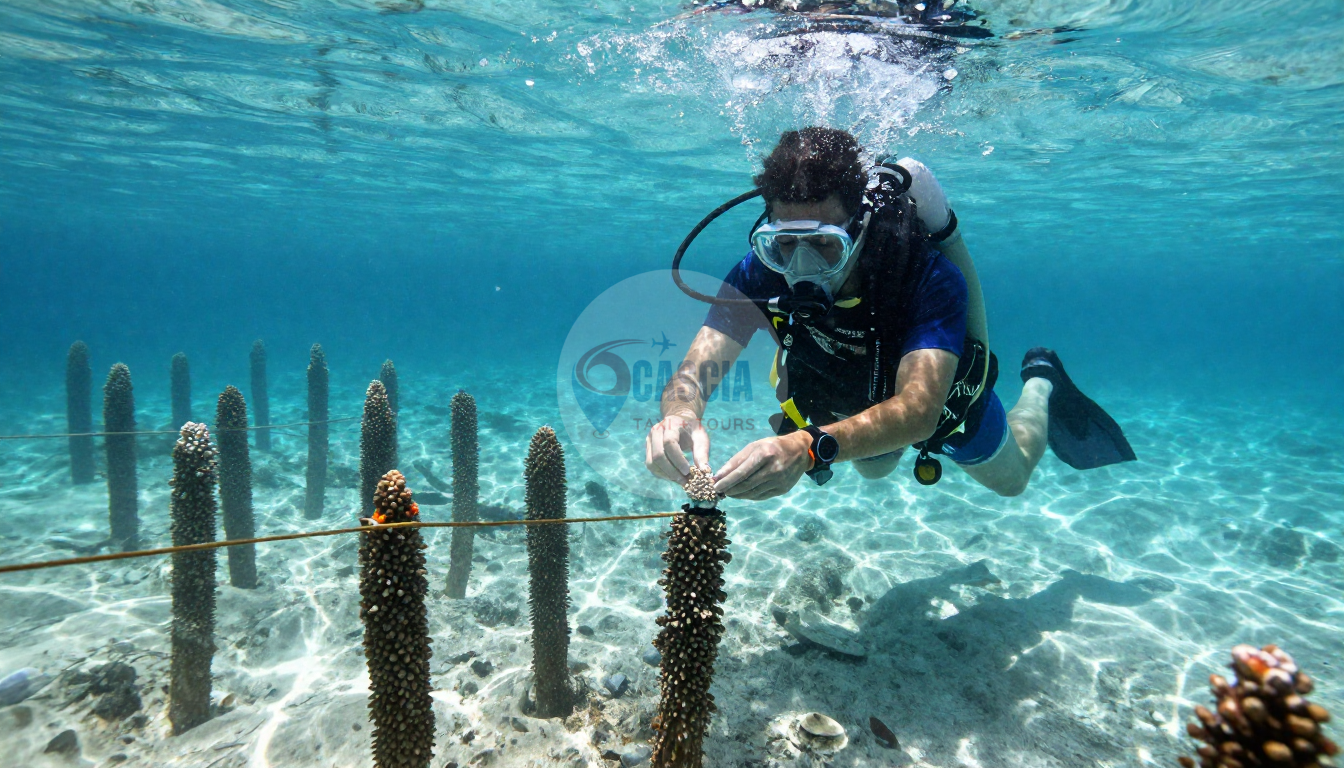
The Red Sea’s corals are among the most resilient on Earth, but they still need our help. Sustainable diving in Marsa Alam has moved beyond simple “look but don’t touch” – today, you can actively participate in coral reef restoration. From planting nursery‑grown fragments to monitoring reef health with AI, this 2026 guide shows you how to turn your dive holiday into a conservation mission. Cascia Taxi provides eco‑conscious transfers to the pioneering centers leading this blue revolution.
Why Coral Restoration Now?
According to the UN Environment Programme (UNEP) , the world lost 14% of its coral reefs between 2009 and 2018. Climate change, pollution, and overfishing are the main drivers. However, the Red Sea’s northern and central regions have shown remarkable heat tolerance. Scientists from the KAUST Red Sea Research Center have partnered with local dive operators in Marsa Alam to scale up restoration using “super coral” strains that can withstand higher temperatures. Sustainable diving is the engine that funds and staffs this work.
How Sustainable Diving Works in Marsa Alam
1. Coral Nurseries & Outplanting
- What you do: Snip a small branch from a fast‑growing coral species, tie it to a rope or underwater structure (nursery), and later – once it reaches size – attach it to a degraded reef.
- Where: Wadi El Gemal National Park and Abu Dabbab Bay.
- Skill level: Open Water Diver. No special training needed; dive guides provide a 30‑minute orientation.
2. Reef Monitoring & Data Collection (Citizen Science)
- What you do: Swim along a transect, take geo‑tagged photos, and feed them into an AI app that identifies coral health.
- Tech used: Smartphone in a waterproof case or a simple GoPro.
- Impact: Your data helps researchers track recovery and plan future restoration.
3. Invasive Species Removal
- What you do: Learn to identify and remove crown‑of‑thorns starfish (a natural predator that can explode in population and decimate reefs). You use a special tool and work under the supervision of a marine biologist.
- Best for: Advanced divers comfortable with long bottom times.
Certified Eco‑Dive Centers in Marsa Alam
- Red Sea Diving Safari (RSDS): Operates its own coral nursery and runs monthly “Reef Clean & Restore” days.
- Marsa Alam Eco Divers: Focuses exclusively on citizen science and restoration; all trips include a data collection component.
- Cascia Taxi Partner Centers: We can recommend and book you into any of the above, and provide transport from your hotel to the jetties.
Sample Sustainable Diving Itinerary
Day 1
- 08:00 – Arrive at eco‑dive center, orientation on coral nursery techniques
- 10:00 – First dive: collect coral fragments and tie them to nursery lines
- 12:00 – Lunch (plant‑based, zero waste)
- 14:00 – Second dive: outplant mature corals onto a restoration site
- 16:00 – Log data, download photos, receive participation certificate
Day 2
- 09:00 – Reef monitoring dive: swim transects, use AI app
- 11:00 – Invasive species removal dive (optional, advanced)
- 13:00 – Debrief with marine biologist; learn how data will be used
Why Choose Cascia Taxi for Sustainable Diving
- Low‑emission transfers: We maintain our vehicles for optimal fuel efficiency and encourage shared rides.
- Eco‑friendly gear storage: Our spacious trunks carry your dive bags and also recycling bins for plastic waste collected during dives.
- Local partnerships: We coordinate with restoration projects to ensure clients arrive on time for tides and working windows.
🌊 Dive with purpose. Book your sustainable diving transfer with Cascia Taxi.
What to Pack for a Restoration Dive
- Reusable water bottle (refill at center)
- Rash guard or wetsuit (to avoid sunscreen – use reef‑safe if needed)
- Dive computer and logbook
- Waterproof camera or phone case
- Cash for project donation (optional but appreciated)
The Bigger Picture: Tourism as a Conservation Engine
Every dollar spent on sustainable diving in Marsa Alam directly supports reef restoration. The Egyptian Environmental Affairs Agency (EEAA) has endorsed these programs as models for the entire Red Sea. By participating, you join a global movement of divers who are not just passive observers but active stewards of the ocean.
Frequently Asked Questions
Q: Does coral restoration hurt the reef?
A: No, when done by trained professionals using science‑based methods, it accelerates natural recovery. The fragments are taken from fast‑growing donor colonies, not from healthy wild reefs.
Q: Can I do this if I’m a beginner diver?
A: Yes, nursery and outplanting dives are in shallow, calm areas (max 12m). Advanced activities like starfish removal require AOW or equivalent.
Q: Will I receive a certification?
A: Most centers provide a “Coral Restoration Diver” certificate recognized by their own programs; it‘s not a formal agency card but great for your logbook.
Conclusion
Sustainable diving in Marsa Alam is the future of underwater tourism – rewarding, educational, and genuinely helpful. With Cascia Taxi, your journey from hotel to reef is as responsible as the dive itself.

Comment (0)