

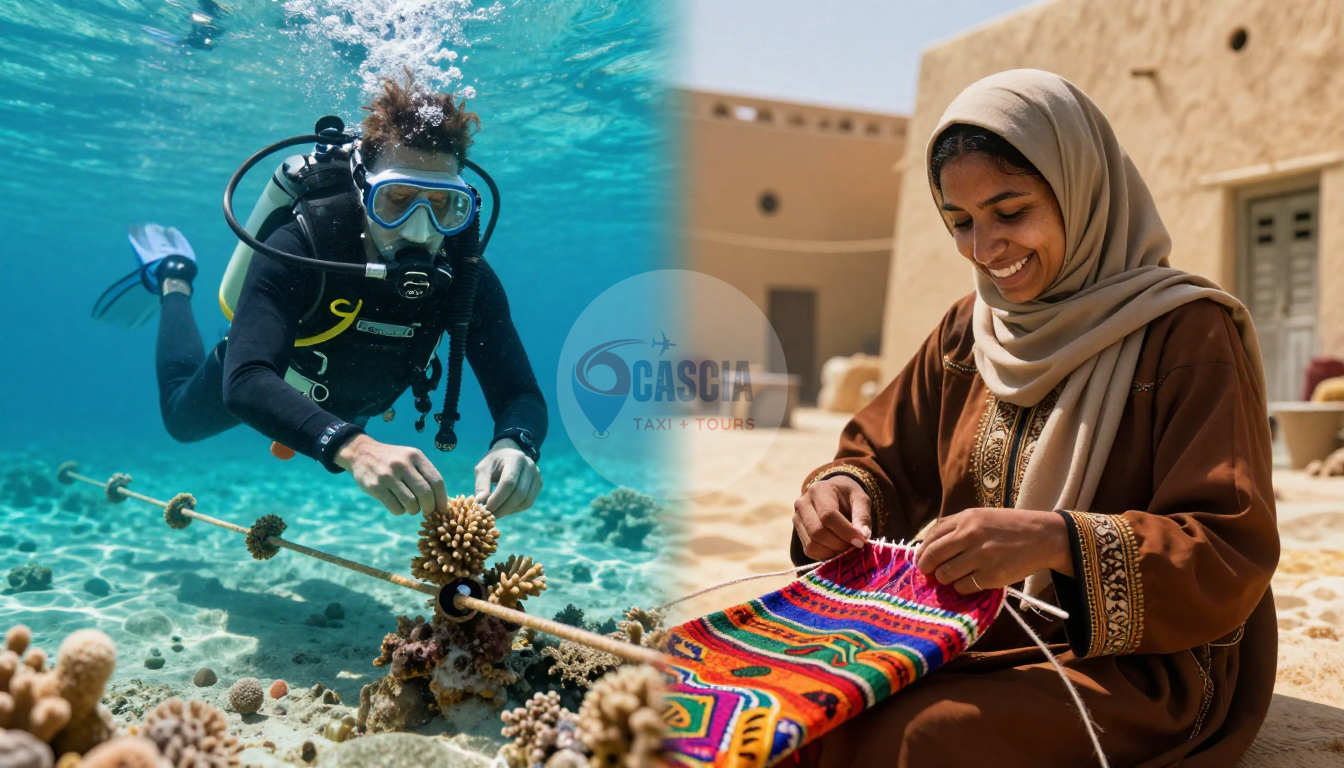
For decades, sustainable travel meant one thing: do no harm. Leave only footprints, take only photographs. But in 2026, a powerful new philosophy is reshaping the way we think about tourism. Regenerative tourism in Marsa Alam goes beyond sustainability—it means leaving a place better than you found it. Your holiday becomes a healing force for the coral reefs, the desert ecosystems, and the local communities that call this corner of Egypt home. This guide explores how Marsa Alam is emerging as a living laboratory for regenerative travel in Egypt, where every visitor can actively participate in restoration. With Cascia Taxi providing seamless, eco-conscious transfers, your journey can be part of the solution from the moment you arrive.
What is Regenerative Tourism?
The concept is simple yet profound: traditional sustainability aims to reduce negative impact, but regeneration actively creates positive impact. According to the UN Tourism Network, the question for 2026 is no longer just “how can tourism protect natural sites?” but “how can tourism help regenerate them?”
Regenerative tourism is built on several key pillars:
- Biodiversity restoration: Tourism revenue funds rewilding projects, coral reef rehabilitation, and endangered species protection.
- Community benefit: Travel spending stays within local communities rather than leaking to multinational corporations.
- Measurable impact: Success is measured through biodiversity gains, soil health, and cultural resilience.
- Visitor participation: Tourists become active participants in conservation, not passive observers.
In 2026, this movement has moved from buzzword to concrete action. Marsa Alam, with its pristine reef systems, protected desert landscapes, and deep Bedouin heritage, is perfectly positioned to lead this transformation in Egypt.
Why Marsa Alam is a Regenerative Tourism Pioneer
Along Egypt’s southern Red Sea coast, Marsa Alam preserves some of the most spectacular reef systems in the entire Red Sea. Its relatively low-density development, combined with a growing commitment to eco-conscious practices, has created a destination where regeneration is not just possible—it’s already happening.
The Egyptian Red Sea Initiative
In June 2026, Egypt officially launched the Egyptian Red Sea Initiative, a national program designed to protect coral reef ecosystems, strengthen climate resilience, and promote sustainable tourism and green investment along the entire Red Sea coast. This initiative represents a major commitment from the Egyptian government to place conservation at the heart of tourism development.
Marsa Alam’s Natural Advantages
What makes Marsa Alam uniquely suited for regenerative tourism?
- Healthy coral reefs: The region still boasts some of the healthiest coral systems remaining in the Red Sea.
- Protected areas: Wadi El Gemal National Park, a 7,450-square-kilometer protected area, provides a sanctuary for dugongs, sea turtles, and migratory birds.
- Low light pollution: The Eastern Desert behind Marsa Alam has almost zero light pollution, allowing for extraordinary stargazing experiences.
- Untouched beaches: Sharm El Luli in Marsa Alam was named among the world’s leading beaches for 2026.
How Marsa Alam is Putting Regeneration into Action
1. Coral Reef Restoration & Citizen Science
Marsa Alam’s coral reefs are not just protected—they are being actively restored. Visitors can participate in a variety of citizen science opportunities, from coral monitoring to debris cleanups.
What you can do:
- Coral nursery participation: Join dive centers in collecting coral fragments and tying them to underwater nursery lines. Once the corals reach size, you can help outplant them onto degraded reefs.
- Reef monitoring: Swim along transects, take geo-tagged photos, and feed them into AI apps that identify coral health. Your data helps researchers track recovery and plan future restoration.
- Coral restoration programs: Some resorts collaborate with nonprofits on research and education initiatives, both at the resort and in the local community.
The Great Reef Census, a global citizen-science dataset, relies on divers worldwide to help track reef health—and Marsa Alam’s dive community is an active contributor.
2. Community-Led Ecotourism: The Ababda Model
One of the most inspiring regenerative stories in Marsa Alam comes from the Ababda community in Wadi El Gemal National Park. The Ababda, traditional inhabitants of this desert region, have shifted from subsistence fishing to community-led ecotourism while protecting their sensitive mangrove coastline.
Al-Qula’an Eco-Village: This Ababda-run eco-village in Wadi El Gemal offers visitors an authentic experience deeply rooted in local knowledge and leadership. The community has developed a sustainable ecotourism model built on existing partnerships between local communities and private-sector operators.
What this means for visitors:
- Your stay directly supports Ababda families and their traditional way of life.
- Tourism revenue funds conservation of the mangrove coastline and marine ecosystems.
- You experience authentic Bedouin hospitality while contributing to cultural preservation.
3. Eco-Resorts That Lead by Example
Several pioneering resorts in Marsa Alam are demonstrating that luxury and regeneration can coexist.
Red Sea Diving Safari (RSDS): A pioneer in eco-resorts, RSDS has fought government rules that required resorts to provide eight rooms per acre, choosing instead to preserve space for nature. The resort features:
- Solar energy powering the entire resort.
- A reverse-osmosis desalination plant producing clean water.
- A 1.5-hectare (and growing) farm producing fresh, local ingredients for guest meals.
- Citizen science opportunities including coral monitoring and debris cleanups.
Paragon & Boulevard Partnership: This development project in Marsa Alam is creating a “regenerative ecosystem where sustainability is deeply ingrained—not only in building materials and energy solutions but also in how we design mixed-use spaces for both visitors and residents to interact and thrive”.
4. The New “Blu-Tech” Promenade
In 2026, Port Ghalib features a new sustainable “Blu-Tech” promenade with high-end boutiques and farm-to-table seafood dining. This development represents a shift toward regenerative infrastructure that enhances the visitor experience while minimizing environmental impact.
5. Protecting What Remains: Hankorab and Beyond
The UN Development Programme (UNDP) describes Wadi El Gemal’s coastline as home to “some of the last undisturbed natural beaches on the Southern Red Sea coast”. Conservation efforts are targeting 13,637 reefs within Wadi El Gemal National Reserve. By choosing regenerative tourism experiences, visitors help ensure these irreplaceable ecosystems remain protected.
How You Can Participate in Regenerative Tourism
Before You Arrive
- Choose a regenerative accommodation: Book eco-resorts that demonstrate genuine commitment to sustainability and community benefit.
- Pack consciously: Bring reef-safe sunscreen, reusable water bottles, and avoid single-use plastics.
- Research citizen science opportunities: Many dive centers offer reef monitoring programs—book in advance.
During Your Stay
🌊 Coral Restoration Dives
Join a coral nursery or outplanting dive. No special training needed—dive guides provide a short orientation.
🐢 Marine Life Monitoring
Participate in seagrass mapping, turtle sightings recording, or reef fish surveys. Your observations contribute to real scientific datasets.
🏖️ Beach Cleanups
Many eco-resorts organize regular beach and reef cleanups. A few hours of your time can remove harmful debris from sensitive ecosystems.
🌿 Community Experiences
Visit Al-Qula’an eco-village or other Ababda-led initiatives. Your presence and spending directly support community-led conservation.
♻️ Support the Circular Economy
Dine at farm-to-table restaurants, buy from local artisans, and choose experiences that keep tourism spending within the local community.
After Your Holiday
- Share your experience: Tell others about regenerative tourism in Marsa Alam.
- Support conservation organizations: Consider donating to local conservation projects.
- Choose regenerative travel again: Make it your new standard for future holidays.
The Cascia Taxi Commitment to Regenerative Travel
At Cascia Taxi, we believe that regeneration begins the moment you arrive. That’s why we’ve aligned our services with the principles of regenerative tourism:
- Eco-conscious fleet: We maintain our vehicles for optimal fuel efficiency and lower emissions.
- Local employment: Our drivers are from the region, ensuring tourism spending benefits the local economy.
- Shared ride options: Traveling with others reduces per-person carbon footprint.
- Partnership with regenerative operators: We work with eco-resorts and conservation-minded tour operators.
- Direct booking: We avoid third-party platforms that add unnecessary digital energy consumption.
🌿 Heal the Red Sea with every journey. Book your regenerative transfer with Cascia Taxi and travel with purpose.
A Sample Regenerative Itinerary
Day 1 – Arrival & Orientation
- Cascia Taxi transfer from Marsa Alam Airport to an eco-resort.
- Orientation on the resort’s sustainability practices.
- Evening: Sunset walk and introduction to the local ecosystem.
Day 2 – Coral Restoration
- Morning: Coral nursery dive—collect fragments and tie them to nursery lines.
- Afternoon: Reef monitoring swim—contribute data to citizen science projects.
- Evening: Presentation from resort marine biologist on reef health.
Day 3 – Community & Culture
- Full day: Visit Al-Qula’an eco-village.
- Learn about Ababda traditions, mangrove conservation, and community-led tourism.
- Share a meal with local families and purchase authentic handicrafts.
Day 4 – Desert & Marine Protection
- Morning: Wadi El Gemal National Park trek—learn about desert ecosystems and conservation challenges.
- Afternoon: Beach cleanup or mangrove planting activity.
- Evening: Stargazing session (the desert’s dark sky is part of the region’s natural heritage).
Day 5 – Departure
- Final morning swim or snorkel.
- Cascia Taxi transfer back to the airport, carrying memories of a holiday that gave back.
Frequently Asked Questions (2026)
Q: Is regenerative tourism more expensive than regular tourism?
A: Some eco-resorts may have higher upfront costs, but the value lies in meaningful experiences, smaller groups, and the knowledge that your spending directly supports conservation and local communities. Many travelers find the deeper connection worth the investment.
Q: Do I need special skills to participate in citizen science?
A: No. Most programs provide short orientations. Coral nursery dives require basic Open Water certification, but many activities—like beach cleanups, seagrass mapping, and data entry—are suitable for non-divers and families.
Q: How do I know if a resort is genuinely regenerative?
A: Look for transparent sustainability reports, partnerships with recognized conservation organizations, local employment practices, and clear explanations of how tourism revenue supports restoration. Ask questions before booking.
Q: Can I combine regenerative activities with regular sightseeing?
A: Absolutely. Many visitors incorporate one or two regenerative activities into a longer holiday. The key is choosing experiences that add value rather than replacing relaxation.
Q: What is the best time of year for regenerative tourism in Marsa Alam?
A: October to April offers the most comfortable temperatures for outdoor activities. However, coral restoration and monitoring programs operate year-round, with summer months offering excellent underwater visibility.
Conclusion: Your Holiday, A Healing Force
Regenerative tourism in Marsa Alam represents a fundamental shift in how we think about travel. No longer passive consumers of landscapes, we become active participants in their restoration. Every coral fragment you help plant, every piece of data you contribute to reef monitoring, every meal you share with an Ababda family, every sustainable choice you make—these actions accumulate into real, measurable healing for the Red Sea.
As the UN Tourism Network has noted, the question for 2026 is how tourism can help regenerate natural sites rather than simply protect them. In Marsa Alam, the answer is already taking shape: through coral nurseries, community-led ecotourism, pioneering eco-resorts, and the growing awareness that travel can be a force for good.
Your holiday can be more than a memory. It can be a legacy.
🌊 Book your regenerative journey today and heal the Red Sea with every mile. Reserve your Cascia Taxi transfer now.

Comment (0)