

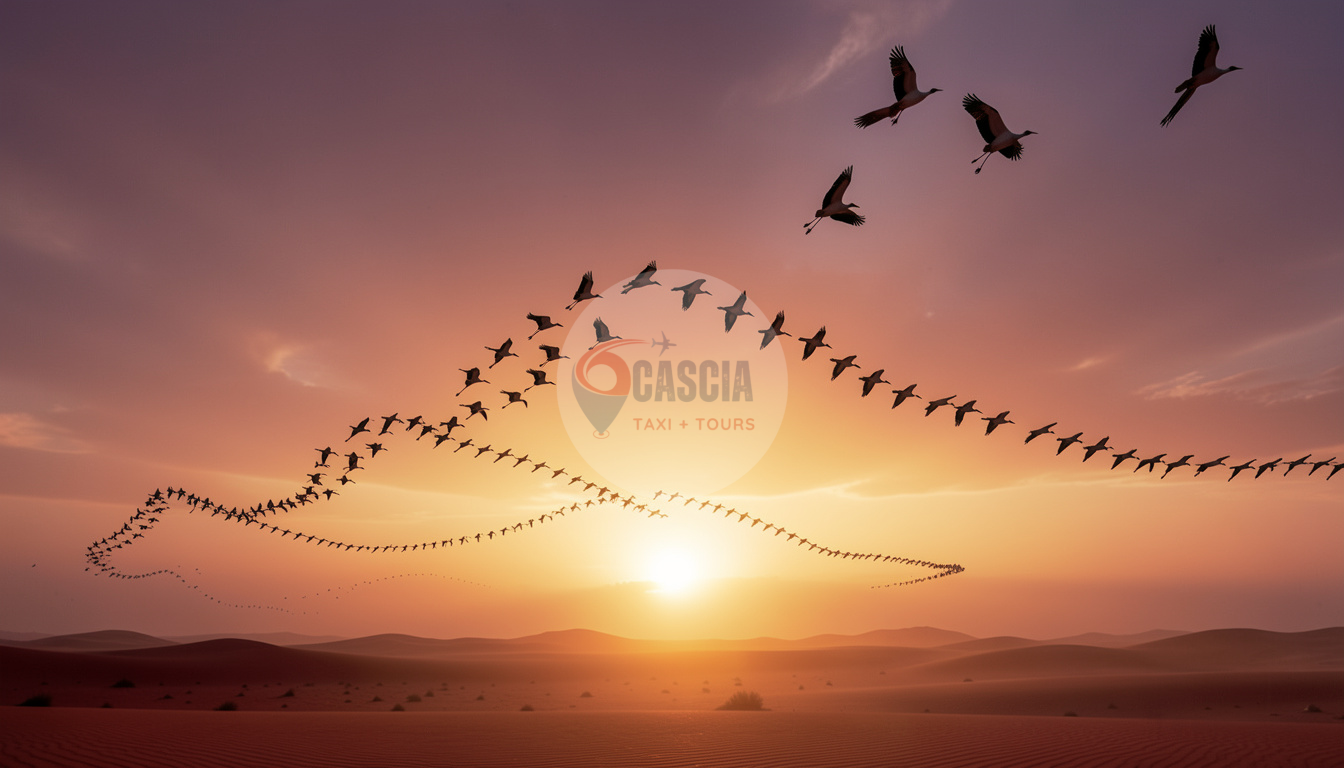
Nestled along Egypt‘s pristine Red Sea coast, Marsa Alam is not only a haven for divers and beach lovers but also a hidden paradise for birdwatchers. Thanks to its strategic location on the Rift Valley/Red Sea flyway, the region offers a front-row seat to one of nature’s grandest spectacles—the mass migration of soaring birds between Eurasia and Africa. This 2026 guide will unveil the best birdwatching in Marsa Alam, from prime locations and seasonal timings to the essential role Cascia Taxi plays in delivering you to these avian hotspots.
🦩 Why Marsa Alam is a Prime Birdwatching Destination
The Red Sea coast lies on a major migration superhighway known as the Rift Valley/Red Sea flyway, which funnels millions of birds through narrow “pinch points,” making sightings more concentrated and predictable. In peak migration, a single session can produce an incredible 10–18 raptor species overhead and 20–40 coastal species in lagoons and mudflats. This unique geography is why birdwatching in Marsa Alam is a high-certainty activity rather than a lucky accident.
📅 Best Times for Birdwatching in Marsa Alam
Planning your trip around the birds‘ natural calendar is key to an unforgettable experience:
- Spring Migration (March–May): The peak “spectacle” season for mass movements, when tens of thousands of raptors, storks, and other soaring birds are on their northbound journey to European breeding grounds.
- Autumn Migration (late August–October): An equally impressive window as birds return south to African wintering grounds.
- Winter (November–February): A great time for steady coastal birding and observing resident desert species without the peak crowds.
- Best Time of Day: For landbirds, aim for 05:30–10:00 when light is clean and birds are most active. For raptor migration, the classic counting hours are 08:00–13:00.
🌍 Key Birdwatching Spots in Marsa Alam
1. Wadi El Gemal National Park – The Crown Jewel
Wadi El Gemal National Park, a sprawling 7,450 sq km protected area along the Red Sea coast, is the undisputed heart of birdwatching in Marsa Alam. The park boasts over 150 species of resident and migratory birds. Here, you can scan the Qulaan mangroves for waders and flamingos, watch ospreys soaring overhead, and listen for the vibrant calls of bee-eaters flitting through the acacia trees.
2. Wadi Lahami Mangroves – A Migrant Superhighway
This mangrove forest, located about 120 km south of Marsa Alam, is a crucial stopover point on the migratory route between Africa and Europe, making it prime birdwatching in Marsa Alam territory, especially in September.
3. Island of Siyul (Island of the Birds)
Known locally as the “Island of the Birds,” this protected islet is a vital nesting site, home to eight species of indigenous birds, including the rare white-eyed gull.
4. Resort Gardens – Unexpected Migrant Traps
The cultivated grounds of resorts like Hilton Marsala Nubian Resort and Shams Alam Resort act as unexpected migrant traps. These “green oases” provide crucial food and rest for tired travelers. Birders have spotted rare species like the Rufous-tailed Scrub Robin and Black Bush Robin right by the swimming pools.
5. Abu Dabbab Bay
Beyond its fame for turtles, the coastline and hotel gardens at Abu Dabbab are fantastic for waders and migrants. The shallow waters often host Western Reef Egrets foraging along the shoreline.
🐦 Birds You Can Expect to See
- Raptors: Steppe Buzzard, Steppe Eagle, Lesser Spotted Eagle, Black Kite
- Waders & Waterbirds: Greater Sand Plover, Black-winged Stilt, Sanderling, Ruddy Turnstone
- Coastal Species: Gulls, Terns, Herons, Western Reef Egret
- Passerines & Others: Eurasian Hoopoe, Brown-necked Raven, Laughing Dove, Spotted Flycatcher, Isabelline Wheatear
🚖 Cascia Taxi: Your Birdwatching Transport Partner
Successful birdwatching in Marsa Alam requires early starts, long drives between diverse habitats, and patience. Public transport doesn‘t work, and renting a car adds stress. Cascia Taxi solves these problems:
- Punctual Pre-Dawn Pickups: We’ll get you to prime spots for the magical morning light and peak bird activity.
- Birding-Friendly Vehicles: Our spacious SUVs comfortably accommodate your gear, including spotting scopes, tripods, and field guides.
- Multi-Spot Efficiency: Maximize your day with a custom route linking mangroves, wadis, and shoreline—all without navigation hassles.
- Local Knowledge: Our drivers know the terrain and can advise on access points and lesser-known spots.
🦩 Ready for an unforgettable birdwatching adventure? Book your customized birding trip with Cascia Taxi today.
🎒 Birdwatching Essentials
- Binoculars (8×42 or 10×42) and a spotting scope (20–60×) for shorebirds
- Camera with telephoto lens
- Sun protection (hat, sunscreen, sunglasses)
- Windproof layer for exposed headlands
- Plenty of water and snacks
- Field guide to Egyptian birds
🐢 Responsible Birdwatching Practices
- Keep a respectful distance, never disturb nesting sites
- Stay on designated tracks to protect fragile desert ecosystems
- Avoid playing bird calls to lure species
- Take all trash with you—leave no trace
- Support conservation by hiring local guides and using eco-conscious transport like Cascia Taxi
🌿 Conservation Context
Marsa Alam‘s strategic importance for migratory birds has earned it attention from major conservation bodies. BirdLife International has designated several Important Bird Areas (IBAs) along the Red Sea coast. The sheer volume of birds moving through the region underscores the importance of responsible, low-impact tourism to protect these critical habitats for future generations.
📋 Sample Birdwatching Itinerary
Morning (05:30–10:00): Wadi El Gemal (mangroves & wadis) → Midday (10:00–13:00): Abu Dabbab Bay (shoreline & hotel gardens) → Afternoon (14:00–17:00): Port Ghaliba marina walk (coastal species)
🧐 Frequently Asked Questions
Q: What is the single best month for birdwatching in Marsa Alam?
A: September is a fantastic choice—the tail end of southbound migration overlaps with still-warm weather, and it‘s the prime time for the Wadi Lahami mangroves. April is also excellent for witnessing the peak of northbound raptor migration.
Q: Do I need a guide for birdwatching in Marsa Alam?
A: While you can explore independently, a local guide greatly enhances the experience by knowing the exact locations of resident species and the best spots for migrants.
Q: Can I combine birdwatching with snorkeling?
A: Absolutely! Many prime spots, like Wadi El Gemal and Abu Dabbab, offer both. You can spend the early morning birding and the afternoon snorkeling over coral reefs.
🏁 Conclusion
Birdwatching in Marsa Alam offers a rare combination of pristine desert landscapes and world-class avian biodiversity. By planning your visit during the migration seasons, visiting the key habitats, and partnering with Cascia Taxi for seamless, comfortable transport, you can unlock an unforgettable journey into the heart of Egypt‘s winged wilderness.
🚗 Book your reliable birding transfer with Cascia Taxi today!

Comment (0)